


Fixes we can get behind
-
Both parties have had plenty of chances to fix healthcare costs, housing, and the rigged economic rules that squeeze working families. They haven't. Not because the problems are too hard, but because the donor class that funds both parties benefits from keeping things exactly the way they are.
I spent nearly 22 years in the Air Force solving hard problems with limited resources, under real pressure, with real consequences if I got it wrong. I learned fast that the people need to come first, but both parties are often focused on the party first. The first question an elected official should ever ask is, “what do the people in this district need me to do?” That's not how either party operates in Olympia right now. They ask, “What does my party want me to do about this?”
Democrats in Olympia have good instincts on healthcare access and housing, but they've struggled to deliver results that reach working families in Eastern Washington. Republicans have legitimate points about small business burdens and government overreach, but too many in LD-6 have prioritized culture war positioning over constituent service.
I'm an Independent because my job is to solve problems for the people of LD-6, and I can't do that if I'm answering to party leadership or the donors behind them. An Independent can work with both sides to bolster the side that is working for the people, whatever the problem or opportunity.
The people of Medical Lake, Airway Heights, and Spokane don't need a reliable partisan vote. They need someone accountable only to them.
-
1-Reducing barriers to entry for local businesses.
Waive state business license fees for new small businesses in years one and two
Pass legislation requiring cities to offer digital, trackable permit applications or lose access to certain state infrastructure grants
Update state zoning enabling law to allow by-right approval for small commercial uses under a defined square footage threshold, cutting council hearings for low-risk businesses
Fund a statewide "Business Navigator" program through Commerce to guide new businesses through licensing in plain language
2-Building Local Capital Access for Homegrown Businesses
Expand Commerce Department Revolving Loan Fund (RLF) funding targeting rural Eastern WA counties specifically
Create a WA Small Business Investor Tax Credit, individuals or local banks investing in qualifying small businesses get a modest state tax break
Fund Community Development Financial Institution (CDFI) capacity grants so existing local lenders can serve more clients without adding overhead
Require state agencies to publish a single, plain-language guide to every available state small business loan and grant program
3-Encouraging Light Manufacturing, Trades and Skilled Production
Increase state Career and Technical Education (CTE) funding for welding, electrical, machining, and logistics; skills matching regional employer demand including defense suppliers
Expand L&I apprenticeship grants to rural employers who partner with local high schools or community colleges
Amend state zoning enabling law to include light manufacturing and maker spaces as permitted mixed-use by right
Fund a "Regional Employer Training Partnership" grant through Commerce; employers define the skills, state co-funds the training
4-Leveling the Playing Field for Small Businesses (Fair Competition Policies)
Cap B&O (Business and Occupation) tax incentives so only businesses under $10M revenue qualify, big chains stop getting small-business breaks
Pass a WA Subscription Transparency Act reinforcing easy cancellation rights under the Consumer Protection Act
Require all state agency procurement over $25K to include a scored local small business preference
Create a "Local First" grant matching program, small businesses that accept SNAP and serve low-income neighborhoods get a state subsidy to offset operating costs
Prohibit economic development incentives to retailers with over $1B in national revenue unless they demonstrate local hiring and supply chain commitments
5-Workforce Housing, Live-Work Zoning, and Place-Based Investment to Retain Talent
Increase Housing Trust Fund allocations specifically for workforce housing at 80–120% AMI in Eastern WA
Pass a statewide Live-Work Zoning Enabling Act so any city can permit residential-commercial mixed units by right, no special hearing required
Create a Missing Middle Housing Tax Credit for developers building duplexes, triplexes, and small apartment buildings near job centers
Tie state transportation and infrastructure grants to cities that adopt workforce housing density minimums
Fund a "Stay and Build" rural retention grant, small businesses and skilled workers who commit to a rural Eastern WA community for five or more years get a state tax benefit
-
1-Automatic Enrollment (with Opt-Out): Cover More Washingtonians without Mandates-No new data is collected, the state only uses information you've already provided.
Whenever someone interacts with a state system – for example, filing taxes, renewing a driver’s license, or applying for other benefits – Washington would automatically check if they’re uninsured, and if eligible, enroll them in a basic health plan (such as Apple Health Medicaid or a low-cost Exchange plan)
Individuals have the option to opt out-and safeguards can be put in place to prevent eligibility issues for people auto-enrolled without desiring it.
Requires the Exchange to report annually on auto-enrollment uptake and opt-out rates to ensure accountability
2-Expand Cascade Care Savings: Help Middle-Income Families Afford Insurance
A family of four earning $90,000 in Spokane can still face health insurance premiums of $1,500 a month or more without employer coverage. Federal assistance helps, but not enough at this income level. Washington should expand its own Cascade Care subsidy program (adding state dollars on top of federal help) to meaningfully reduce premiums for working families who earn too much to qualify for Medicaid but too little to comfortably afford coverage on their own.
We'll direct the Health Benefit Exchange to model costs and thresholds, and fund expansion by reinvesting savings from healthcare cost benchmark enforcement, shifting dollars from expensive uncompensated emergency care to affordable preventive coverage.
3-Enforce Healthcare Cost Benchmarks: Hold Big Players Accountable for Excessive Costs
Hold Healthcare Systems Accountable for Unjustified Cost Increases
Washington families and small businesses are paying some of the highest healthcare prices in the country - not because care got better, but because large, consolidated hospital systems face little competitive pressure to keep costs down. Eastern Washington is no exception. When a major health system raises prices significantly above what independent benchmarks show is reasonable, patients pay more, employers pay more, and the state pays more, with no requirement to explain why.
Washington's Health Care Cost Transparency Board already sets annual cost growth benchmarks. What's missing is the ability to act when those benchmarks are consistently ignored. We would strengthen the Board's authority in a targeted, fair way:
Graduated Accountability, Not Blanket Penalties When a large hospital system (defined by revenue threshold, not size alone) exceeds the cost benchmark without documented justification, the process would work in stages: first, a required public explanation; second, if that explanation is insufficient, a formal corrective action plan developed with state oversight; third, only after repeated failure to comply, graduated financial consequences. No fines without process. No surprises.
Protect Rural and Critical Access Hospitals Rural hospitals in Eastern Washington operate on thin margins and serve communities that have no other option. Benchmark enforcement would explicitly exempt Critical Access Hospitals and small rural facilities- this policy targets consolidated systems with market power, not the community hospitals our rural neighbors depend on.
Independent, Transparent Justification Standards "Justification" won't be defined by politics. The Health Care Cost Transparency Board (composed of independent experts) would establish clear, published criteria for what constitutes a legitimate cost increase: documented rise in labor costs, capital investment, increased patient acuity, or other verifiable factors. Systems would submit justifications publicly, so journalists, patients, and policymakers can evaluate them. Sunlight is the first enforcement tool.
Who This Targets Large, profitable, consolidated health systems that have used market dominance to raise prices beyond what quality improvements justify. Not your local rural clinic. Not a hospital running on thin margins to serve underserved communities. The goal is accountability where market power exists, and protection where it doesn't.
4- Incentives for Rural and Underserved Providers: Strengthen the Healthcare Workforce in Eastern Washington
Bring More Doctors, Nurses, and Care to Eastern Washington
Rural Eastern Washington has a healthcare worker shortage that's been getting worse for decades. Here's how we fix it.
Pay Down Student Debt for Providers Who Stay Doctors, nurses, and mental health providers who commit to three years in rural Eastern Washington get up to $50,000 in state-funded loan repayment. We already have this program. We'd expand it significantly.
Train Providers Here So They Stay Here Providers who train in a community are far more likely to stay. We'd add rural residency slots through WSU's Elson S. Floyd College of Medicine so new doctors complete training in places like Colville or Walla Walla, not just Seattle.
Make Telehealth Actually Work A patient in Republic shouldn't drive two hours for a routine appointment. We'd tie rural broadband investment directly to healthcare access and fix reimbursement rates so telehealth is financially viable for providers.
Let Qualified Providers Do More Highly trained Nurse Practitioners are currently blocked by outdated rules requiring physician oversight, even where no physician exists. We'd update those rules. An experienced Nurse Practitioner beats an empty exam room every time.
Grow Our Own Workforce Partner Eastern Washington high schools and community colleges with local healthcare employers to create direct career pathways into nursing, medical assisting, and behavioral health. Homegrown providers stay.
5-Simplify Insurance and Improve Transparency: Make the System User-Friendly
Make the Healthcare System Less Confusing and More Honest
Insurance paperwork shouldn't require a law degree. Hidden prices shouldn't be legal. Here's how we fix both.
Stop Surprise Bills You go to an in-network hospital, but the anesthesiologist who treats you is out-of-network. Suddenly you owe thousands nobody warned you about. We'd strengthen Washington's surprise billing protections so that if you did everything right, you can't be ambushed by a bill you couldn't have anticipated.
Make Drug Prices Searchable Before You Need Them Washington would require insurers to maintain a public, searchable database showing exactly what your plan covers and what each drug costs you. Look it up before you fill the prescription, not after. This is something the state legislature can do now, and it costs almost nothing.
Standardize Insurance Plans So Choices Are Meaningful Washington's Exchange currently offers so many plan variations that comparing them is nearly impossible. We'd limit plan structures to a manageable set of standardized options (think: good, better, best) so that shopping for insurance feels like a real choice instead of a puzzle designed to confuse you.
Require Hospitals to Post Their Prices Federal law already requires this. Most hospitals ignore it. Washington would enforce it with real consequences and require prices to be posted in plain language, not buried in spreadsheets nobody can read.
One Place to Get Help Navigating Medicaid, the Exchange, subsidies, and plan transitions is genuinely hard. We'd fund trained enrollment navigators in every rural county so that one phone call or office visit gets you answers, applications, and follow-through, regardless of which program you qualify for.
The Goal: Coverage That Works for Everyone
Every proposal above shares one purpose — more Washingtonians covered, lower costs, less confusion. We get there not by mandating a single government system, but by fixing what's broken, filling what's missing, and making sure competition in the insurance market actually works in patients' favor rather than against them.
-
1-Lower Rent by Increasing Housing Supply Where LD‑06 Needs It -Primary tools here are regulatory, removing barriers costs less than building subsidized units.
Reduce upward pressure on rent and home prices by legalizing modest infill, shortening permitting timelines, and lowering non‑construction costs.
-Legalize and Normalize Small Infill Housing
Allow du/tri/fourplexes, and small apartment buildings with minimum parking requirements near jobs, schools, and services
-Reduce the “Permitting Tax”
Time delays raise financing costs, which are passed directly into rents.
-Stop Loading Housing With Unrelated Costs (design mandates beyond safety, disproportionate impact fees, utility hookup charges for small infill being charged same as large developments, etc.)
2-Lower Childcare Costs by Expanding Supply-Slot creation grants can be funded within existing DCYF budget reallocation.
Reduce childcare costs by making it easier to open, expand, and staff childcare providers while protecting safety standards.
-Streamline Childcare Licensing and Zoning
Eliminate duplicative licensing steps, prioritize safety, protect small in-home providers from zoning rules that prevent home-based childcares
-Fix Subsidy Cliffs
Reduce income eligibility phase-outs to prevent small raises from triggering large cost increases, increase outreach to eligible families (families shouldn’t lose $3 in subsidies for every $1 raise they receive)
-Incentivize Capacity Creation
Target tax incentives and grants towards providers creating net-new slots, support employer-based childcare partnerships only when they expand capacity
-Address workforce shortage, find ways to create a pipeline and better compensation for workers.
3-Tax Relief and Transparency for Working Families-The taxpayer receipt is a publishing mandate, minimal administrative cost.
Lower the effective cost of living through targeted tax relief and clear visibility into how tax dollars are used.
-Expand the Working Families Tax Credit
Increase outreach and simplify enrollment, consider modest eligibility expansions focused on working households below median income
-Property Tax Fairness
Modernize property tax relief programs for seniors and low-income households, explore broader circuit-breaker protections to prevent residents from being taxed out of their homes. (Simple example: The rule says you should never pay more than 5% of your income in property taxes. You make $40,000 a year. That means your cap is $2,000. If your tax bill comes in at $3,500, the circuit-breaker kicks in and the state covers or forgives that extra $1,500.)
-Full Transparency
Create a statewide “taxpayer receipt” showing where tax dollars go, require clear, plain language explanations for new local levies. Aaron will fight for legislation requiring the state budget office to publish this annually in accessible formats.
-
Homelessness and Housing Stability
No one ends up on the street because life is going well. The traditional approach tells people to get sober and get stable before they can get a roof over their heads. But you can't address addiction, mental health, or employment while you're surviving outside. The evidence, both overseas and right here at home, shows that providing stable housing first, then wrapping services around the person, works better and costs taxpayers less.
It works. Here's the proof.
Finland launched Housing First in 2008. Homelessness in shelters and hostels dropped 76%. The program saves at least €15,000 per person per year because people stop cycling through ERs, jails, and police calls. Houston revamped its entire homeless system around Housing First and cut homelessness by 55% in under a decade. A downtown Seattle pilot saved 53% on health and social service costs per person, per month. Charlotte, North Carolina saved $2.4 million in one year; tenants spent 1,050 fewer nights in jail and 292 fewer days in hospitals. Nationally, the CDC reviewed 26 studies and found that for every $1 spent on Housing First, the economic return was $1.80. Right here in Spokane, the city's shift to scattered-site shelters with wraparound services saw an 11% drop in people entering the homeless system in 2025, and the rate of people exiting into permanent housing jumped from 22% to 29% in a single year.
This isn't theory. It's math.
But the problem is outpacing the response. Spokane County's homeless count rose from 1,309 people in 2019 to over 2,000 in 2024, a 54% increase in five years. The regional Continuum of Care (CoC) already uses Housing First principles and earned national recognition for its approach. What's missing isn't the right philosophy; it's the scale, the funding, and the coordination to match the size of the problem.
What I will fight for in Olympia:
Fund housing and treatment together. Right now, housing dollars and behavioral health dollars flow through separate programs with different rules. That forces providers to choose between keeping someone housed and getting them into treatment. Spokane's own strategic plan calls this out as a barrier. I will push to braid these funding streams so a single provider can offer housing, case management, addiction treatment, and mental health care without navigating five separate applications.
Get Eastern Washington its fair share. The legislature invested $605 million in the Housing Trust Fund last biennium. Too much of that money stays on the west side. I will fight to ensure rural and Eastern Washington communities get proportional funding for permanent supportive housing, not just emergency shelters.
Remove zoning barriers for supportive housing. Communities can't build these units if local zoning blocks them. I will support legislation that prevents cities from using zoning to deny permanent supportive housing in residential and commercial zones, while requiring meaningful community engagement so neighborhoods have a voice in how projects are designed.
Protect what's working locally. Spokane's scattered-site model is producing real results. Federal funding shifts could undermine that progress as early as 2027. I will advocate for state backstop funding so local programs don't collapse when Washington, D.C. changes direction.
Prevent homelessness before it starts. The cheapest person to house is the one who never loses their home. Spokane's CoC plan says it plainly: keeping someone housed costs far less than putting them through the homeless system. I will strengthen eviction prevention programs (already active in Medical Lake, Airway Heights, and the West Plains) and expand emergency rental assistance so one bad month doesn't become a years-long crisis.
Pay the people who do this work. Homeless service providers across Spokane County can't fill positions. Workers are underpaid, carrying heavy caseloads, and burning out from daily trauma. If we can't staff the programs, the programs don't work. I will push for state funding structures that require livable wages for frontline workers in contracted homeless services, because you can't build a system on the backs of people making less than a barista.
Demand accountability and outcomes. Housing First isn't "no rules." It's stable housing plus expectations, plus the tools to meet them. Every dollar of state funding should be tied to measurable outcomes: housing retention rates, treatment engagement, and reductions in ER and jail usage. If a program isn't producing results, we redirect those resources to one that is. Spokane's CoC already has a Performance Management Plan that does exactly this. I will make sure state funding follows the same logic.
Compassion and accountability aren't at odds. In the military, I learned that you stabilize the situation first, then address root causes. You don't demand people fix themselves while the building is still on fire. But once the fire is out, you hold everyone to a standard.
This the approach I promise to bring to Olympia.
-
The problems are real and they're already here.
Wildfire seasons in Eastern Washington have grown longer and more destructive. The 2021 drought cut Palouse wheat yields to historic lows. The snowpack that feeds our rivers and irrigates our farms is shrinking. These aren't projections; they're events that already happened to people in this district.
What I will fight for in Olympia:
Clean up the West Plains water, now. PFAS "forever chemicals" were identified in Airway Heights groundwater in 2017, traced to firefighting foam used at Fairchild Air Force Base since the 1970s. The federal government recently pushed the cleanup deadline back six years to 2032, affecting approximately 4,000 homes, with no advance warning to residents. That is unacceptable. I will use every available state tool, legislative pressure, agency coordination, and partnership with our congressional delegation, to ensure Washington does not let the federal government quietly walk away from this community. I will push for state-funded testing assistance for private well owners outside current program boundaries and full public disclosure of contamination data in plain language residents can actually use.
Wildfire resilience, not just response. The state spends enormous sums fighting fires after they start. We spend comparatively little on the forest management and prescribed burning that prevents catastrophic fires in the first place. I will push for increased funding for proactive forest thinning and community protection zones, particularly in rural Eastern Washington where fire risk is highest and response times are longest.
Protect agricultural water access. Family farms in LD-6 depend on reliable water. I will support investments in irrigation efficiency, water storage, and aquifer protection so that Eastern Washington farmers have the tools to stay productive as water supply patterns shift. This means working with farmers and irrigation districts directly, not imposing mandates from Olympia.
Clean energy where it makes sense for Eastern Washington. Our region already produces clean, affordable hydropower. There are real opportunities to expand wind and solar on the West Plains and across Eastern Washington, creating local jobs and reducing costs for rural residents and businesses. I will support state investment in grid upgrades and transmission infrastructure that allows local clean energy production to flow where it's needed.
Keep the Columbia Basin working. The Snake River system is vital to our farmers, our tribes, and our economy. I support a practical, science-based approach to salmon recovery that maximizes fish survival through every available means, including spill operations, habitat restoration, and tributary improvements, while protecting the economic benefits the dams provide until viable alternatives are in place. This is not a binary choice; it is an engineering and policy problem that requires adult decision-making, not culture war positioning.
Rural communities deserve clean air and water too. I will oppose any rollback of clean air or clean water protections that put Eastern Washington communities at greater risk. The Spokane River and the Columbia Basin aquifer are not negotiable.
The bottom line is simple: a healthy environment and a healthy economy are not opposites. Eastern Washington has always known that. The land, the water, and the air are the foundation of everything else.
-
Every person in LD-6 deserves to be treated with basic dignity and to have their rights protected under the law. That's not a progressive position or a conservative position. It's an American one.
What I will fight for in Olympia:
Government out of personal decisions. Healthcare decisions, including those about pregnancy and family planning, belong between a patient and their doctor. Washington law currently protects that principle and I will defend it against any legislative effort to substitute political judgment for clinical judgment.
Basic dignity is not partisan. People who work hard, pay taxes, and live peacefully deserve to be left alone, including how they live their personal lives. I will oppose any legislation that targets individuals for discrimination based on who they are. Government's job is to solve problems, not police how people live.
Religious freedom means freedom for everyone. The right to practice your faith is fundamental. It does not extend to imposing that faith on others through force of law. Both things are true at once.
Workers have rights too. The right to organize, work in safe conditions, and be paid what you're owed are baseline protections for the people whose labor drives this economy. I will support enforcement of existing labor protections and oppose efforts to erode workers' ability to advocate for themselves.
None of this requires you to agree with me on everything. It only requires a shared belief that the law should treat people fairly and that basic dignity isn't something you earn by belonging to the right group.
-
Washington state is not a bystander in this story. Eastern Washington is increasingly the physical home of the data centers that power artificial intelligence at scale. That creates both an opportunity and an obligation.
What I will fight for in Olympia:
Water and power accountability. Data centers can consume millions of gallons of water per day. Large facilities can strain regional electrical infrastructure and drive up costs for existing customers. Operators, not ratepayers and not farmers, should cover the costs their operations create. I will support transparency requirements and cost-allocation rules that make that happen, and only when the technology makes sense and is safe for our communities will I support their installation where the people of LD-6 are affected.
Community benefit agreements. When a major facility wants to locate here, the community should get something real in return: local hiring commitments, workforce training partnerships, and infrastructure investment. I will support legislation that gives local governments real leverage to negotiate those agreements.
AI transparency in government. Washington agencies are already using artificial intelligence in decisions affecting residents, including benefits determinations and child welfare assessments. I will push for mandatory disclosure when AI systems are used in consequential decisions and for meaningful human review before those decisions become final. Algorithms do not replace accountability.
Privacy protection. Washington needs stronger consumer data privacy rules that give residents real control over how their data is collected, sold, and used. The goal is not to stop innovation; it is to make sure innovation doesn't happen at the expense of people who never agreed to the terms.
We missed the window to get ahead of social media's harms. We don't have to repeat that mistake.
-
Healthcare costs stay high because the insurance and pharmaceutical industries spend hundreds of millions making sure they do. Working families pay a higher effective tax rate than some billionaires because the people writing the tax code are funded by those same billionaires. These are documented, publicly reported facts, not talking points.
Other states are already fighting back.
A bipartisan team of former Montana officials, including a former Republican National Committee chairman, has drafted a constitutional initiative headed for Montana's 2026 ballot that would strip corporations of the power to spend money in politics entirely. The approach is legally creative: rather than trying to regulate corporate speech (which Citizens United blocked), it simply declines to grant corporations political spending powers in the first place, a distinction the Supreme Court's own precedents may allow. Meanwhile, Maine voters overwhelmingly backed a 2024 referendum limiting individual contributions to super PACs to $5,000, directly challenging the unlimited outside spending that has defined elections since Citizens United.
These efforts show that reform is not a fantasy. States have real tools, and the political will exists when elected officials aren't the ones blocking the door.
What I will fight for in Olympia:
Full disclosure, no exceptions. Every dollar spent to influence a Washington election should be publicly traceable to its source, including money flowing through PACs, party committees, and nonprofit advocacy organizations. Dark money is anonymous influence, and anonymous influence is the opposite of accountability.
Strengthen the Public Disclosure Commission (PDC). Washington's PDC is underfunded relative to what it oversees. I will push for increased funding and stronger investigative authority so disclosure requirements have real teeth.
No fundraising during session. It is a basic conflict of interest for legislators to solicit campaign contributions from lobbyists while actively voting on legislation affecting those same interests. Washington should enact a fundraising blackout period during legislative sessions, as several states already have.
Small-donor matching. The most effective way to reduce large-donor influence is to make small donors matter more. A state-level matching program that amplifies small contributions from district residents reduces candidates' dependence on large checks and makes campaigns more responsive to the people they're supposed to serve.
Stock trading prohibition. Elected officials should be prohibited from trading individual stocks while in office. The conflict of interest is obvious. Blind trusts with no communication should be the standard.
I will follow every one of these rules myself. The credibility to fight for cleaner politics comes from actually running clean.
-
What I will fight for in Olympia:
Fund schools based on what students actually need. Rural and lower-income districts in Eastern Washington still operate at a disadvantage under the current funding formula. I will push for adjustments that account for the higher per-pupil cost of educating students in geographically isolated communities, and for special education funding to actually reach recommended levels instead of forcing local districts to cover the gap.
Treat teachers like professionals. Eastern Washington schools are losing experienced teachers faster than they can replace them. Pay, working conditions, manageable class sizes, and a real voice in policy decisions all matter. I will support funding structures that let small and rural districts compete for qualified teachers.
Respect every career path. Career and Technical Education (CTE) programs leading into skilled trades, healthcare, manufacturing, and agricultural technology deserve the same funding respect as college-prep curricula. I will push for increased CTE funding and stronger partnerships between high schools, community colleges, and regional employers so students graduate with skills that translate directly into jobs here.
Keep curriculum decisions local. The legislature's job is to set clear standards, fund schools adequately, and then get out of the way. I will oppose efforts to use the legislature as a tool for political interference in individual classrooms, from either direction.
Address the youth mental health crisis. Students who are struggling cannot learn effectively regardless of curriculum quality. I will push for dedicated state funding for school counselors and school-based mental health services, because student wellbeing and student achievement are inseparable.
Parents in Medical Lake and parents in Airway Heights want the same things: safe schools, supported teachers, and graduates with real options. That's what I'll work toward.
-
LD 6 is home to Fairchild Air Force Base (AFB) and the Air Force's largest air refueling wing, which means this district carries a responsibility most others don't. What a State Representative controls is state tax policy, state licensing rules, state behavioral health funding, and local land use, and that's exactly where I'll focus. I served, I served in combat, and in leadership roles with real consequences. I understand how the military works, operates, and what it needs.
-Finish the property tax fix for disabled veterans.-Cut the licensing friction that costs military spouses jobs.
-Protect Fairchild's land use buffer.
-Fund the state side of veteran mental health, not just the federal side.
-Get homeless veterans housed here, and keep doing it.
-Build a real bridge from uniform to workforce.
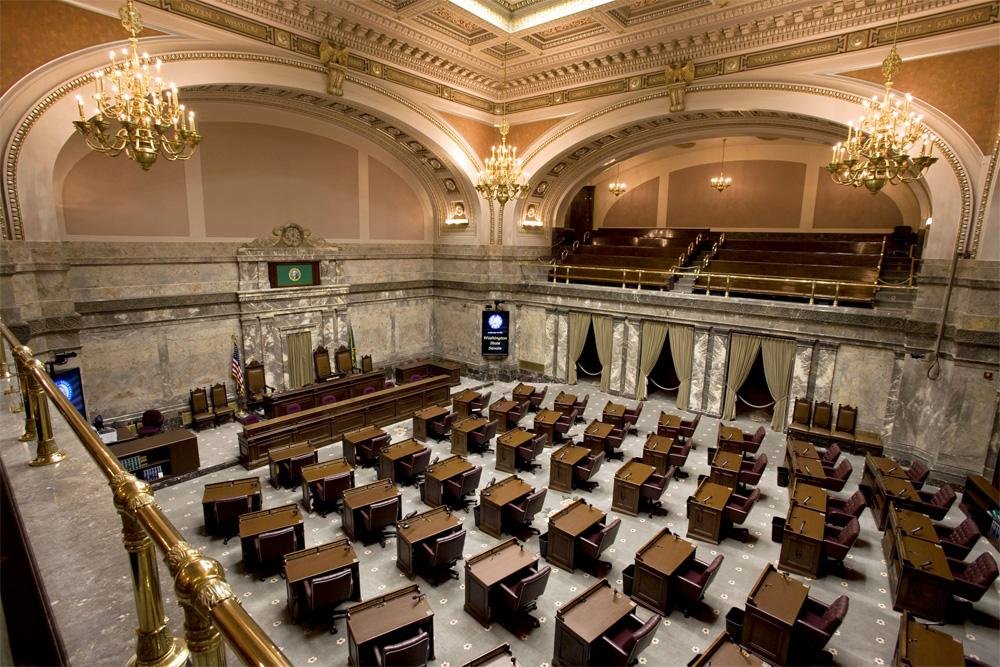
The 2 party system prevents popular legislation from Passing
Our system of government throughout the entire U.S. is built on a foundation of putting party above the public. A wildly popular piece of legislation can be stopped dead in its tracks because the party whips and donors tell the representatives to kill the bill.
Term limits, transparency in government finances, and ending partisan gerrymandering, all issues with sweeping bipartisan support get stopped as soon as our representatives are told by the whips and donors to drop it.
An independent representative like Aaron Croft does not need to “fall in line” with the party whips. Independent candidates are not bound to billionaire donors, instead they must listen to their constituents to ensure bills we sponsor are the ones the public wants most.
Click the button below to learn about our current legislative leadership.
House & Senate Bills supported by Aaron Croft
Healthcare Solution
House Bill 1445 & Senate Bill 5233
Companion bills aimed at delivering affordable healthcare to all Washington residents through the creation of the Washington Health Trust.
Multiple economic research papers have concluded that affordable healthcare reduces costs of healthcare for everyone in the state, allows people of all classes to obtain healthcare, and removes the power of private insurance underwriters with no medical degree deciding what procedures and medications are allowed.
Healthcare should put people and not profit first. HB 1445 and SB 5233 give the people of Washington a solution to the healthcare crisis facing America today.
Homelessness Solution
House Bill 2587
This bill aims to give non-profits throughout Washington the autonomy and funding to provide aid to the growing homeless population in the state.
Our current system does not provide 501(c)3 organizations enough resources to help solve the problems facing Washington. The bill advances funding stuck in agencies due to overbearing red tape.
With the funding provided to them, non-profits can build and market shelters to the growing homeless population that are being displaced to suburban and rural communities that need assistance to handle this influx of low-income population.
Competition Incentivization
Senate Bill 5122
The Uniform Antitrust Pre-Merger Notification Act was passed in 2025 to prevent monopolization and conglomeration through mergers. Antitrust laws have a long standing precedent of bringing down the costs of average goods and increasing gross domestic product.
Capitalism only thrives under extreme competition, where no single firm can control the market price of a good or service. Senate Bill 5122 ensures that businesses from outside Washington state cannot buy out entire home grown sectors of our local economy. This forces new or outside businesses to compete on the quality of product produced rather than competing in the courts over mergers.
Strict enforcement of these anti-trust laws are a must, and an independent candidate like Aaron Croft will not be swayed by donors or party whips, ensuring that the average Washington resident is benefitted, not harmed, by our capitalist system.