


Fixes we can get behind
-
1-Reducing barriers to entry for local businesses.
Streamline Permitting and Licensing
Modernize Zoning Codes
Reduce Fees and Red Tape
Improve Financing process:
-Local bank & credit union subsidies
-Low or no-interest loans for ag workers2-Building Local Capital Access for Homegrown Businesses
Revolving Loan Funds (RLFs)
Microloan Programs
Community Development Financial Institutions (CDFIs)
Local Investment Networks
3-Encouraging Light Manufacturing, Trades and Skilled Production
Small-Scale Manufacturing Hubs
Building a manufacturing work force to help out Fairchild AFB
Zoning for “Production-Friendly” Uses
Workforce Training and Apprenticeships
Trade schools for jobs Fairchild AFB could utilize (welding, plumbing, cooking, etc.)
Increased infrastructure and industrial park investments
4-Leveling the Playing Field for Small Businesses (Fair Competition Policies)
Enforce Anti-Monopoly Laws
Strict overview of big-box retailers pricing out local businesses
Bring One-Click Cancellation to Washington
Limit Subsidies to Big-Box Retailers & provide subsidies to local businesses that accept SNAP
Local Procurement Preferences
Land Use Tools to Check Chains
Foster a Small-Business-Friendly Built Environment
5-Workforce Housing, Live-Work Zoning, and Place-Based Investment to Retain Talent
Expanding Workforce Housing Options
Enabling Live-Work Communities
Place-Based Investment and Placemaking for Talent Retention
-
1-Automatic Enrollment (with Opt-Out): Cover More Washingtonians without Mandates
Whenever someone interacts with a state system – for example, filing taxes, renewing a driver’s license, or applying for other benefits – Washington would automatically check if they’re uninsured, and if eligible, enroll them in a basic health plan (such as Apple Health Medicaid or a low-cost Exchange plan)
Individuals have the option to opt out
2-Expand Cascade Care Savings: Help Middle-Income Families Afford Insurance
Raise the eligibility for state subsidies to, for example, 400% of Federal Poverty Level (FPL) or higher, ensuring moderate-income families (not just the poorest) get some premium assistance
3-Enforce Healthcare Cost Benchmarks: Hold Big Players Accountable for Excessive Costs
If a hospital system in Spokane continuously hikes prices above the benchmark without clear justification, the state could require it to submit a corrective action plan and potentially levy fines or rate caps if it fails to improve
4- Incentives for Rural and Underserved Providers: Strengthen the Healthcare Workforce in Eastern Washington
Loan Repayment and Scholarships
Rural Residency Programs
Telehealth Support and Infrastructure
Scope-of-Practice Reforms
Local Training Pipelines
5-Simplify Insurance and Improve Transparency: Make the System User-Friendly
Standardized Insurance Plans and Clearer Choices
Insurance Form and Billing Simplification
Drug and Provider Price Transparency
Searchable drug formulary mandate
Simplify Eligibility and Transitions
One-Stop Help for Consumers
All policies with the ultimate goal of moving towards some form of universal healthcare
If insurance companies need to compete with a state funded plan, the companies will need to make their policies more attractive.
-
1-Lower Rent by Increasing Housing Supply Where LD‑06 Needs It
Reduce upward pressure on rent and home prices by legalizing modest infill, shortening permitting timelines, and lowering non‑construction costs.
-Legalize and Normalize Small Infill Housing
Allow du/tri/fourplexes, and small apartment buildings with min parking requirements near jobs, schools, and services
-Reduce the “Permitting Tax”
Time delays raise financing costs, which are passed directly into rents.
-Stop Loading Housing With Unrelated Costs
2-Lower Childcare Costs by Expanding Supply
Reduce childcare costs by making it easier to open, expand, and staff childcare providers while protecting safety standards.
-Streamline Childcare Licensing and Zoning
Eliminate duplicative licensing steps, prioritize safety, protect small in-home providers from exclusionary zoning
-Fix Subsidy Cliffs
Reduce income eligibility phase-outs to prevent small raises from triggering large cost increases, increase outreach to eligible families
-Incentivize Capacity Creation
Target tax incentives and grants towards providers creating net-new slots, support employer-based childcare partnerships only when they expand capacity
3-Tax Relief and Transparency for Working Families
Lower the effective cost of living through targeted tax relief and clear visibility into how tax dollars are used.
-Expand the Working Families Tax Credit
Increase outreach and simplify enrollment, consider modest eligibility expansions focused on working households below median income
-Property Tax Fairness
Modernize property tax relief programs for seniors and low-income households, explore broader circuit-breaker protections to prevent residents from being taxed out of their homes
-Radical Transparency
Create a statewide “taxpayer receipt” showing where tax dollars go, require clear, plain language explanations for new local levies
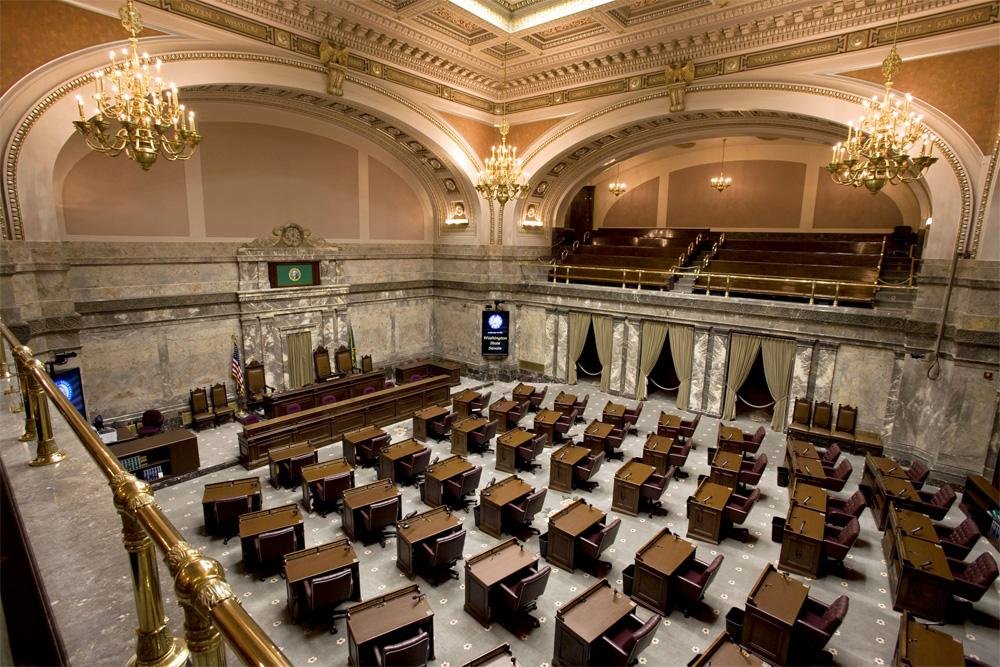
The 2 party system prevents popular legislation from Passing
Our system of government throughout the entire U.S. is built on a foundation of putting party above the public. A wildly popular piece of legislation can be stopped dead in its tracks because the party whips and donors tell the representatives to kill the bill.
Term limits, transparency in government finances, and ending partisan gerrymandering, all issues with sweeping bipartisan support get stopped as soon as our representatives are told by the whips and donors to drop it.
An independent representative like Aaron Croft does not need to “fall in line” with the party whips. Independent candidates are not bound to billionaire donors, instead they must listen to their constituents to ensure bills we sponsor are the ones the public wants most.
Click the button below to learn about our current legislative leadership.
House & Senate Bills supported by Aaron Croft
Healthcare Solution
House Bill 1445 & Senate Bill 5233
Companion bills aimed at delivering affordable healthcare to all Washington residents through the creation of the Washington Health Trust.
Multiple economic research papers have concluded that affordable healthcare reduces costs of healthcare for everyone in the state, allows people of all classes to obtain healthcare, and removes the power of private insurance underwriters with no medical degree deciding what procedures and medications are allowed.
Healthcare should put people and not profit first. HB 1445 and SB 5233 give the people of Washington a solution to the healthcare crisis facing America today.
Homelessness Solution
House Bill 2587
This bill aims to give non-profits throughout Washington the autonomy and funding to provide aid to the growing homeless population in the state.
Our current system does not provide 501(c)3 organizations enough resources to help solve the problems facing Washington. The bill advances funding stuck in agencies due to overbearing red tape.
With the funding provided to them, non-profits can build and market shelters to the growing homeless population that are being displaced to suburban and rural communities that need assistance to handle this influx of low-income population.
Competition Incentivization
Senate Bill 5122
The Uniform Antitrust Pre-Merger Notification Act was passed in 2025 to prevent monopolization and conglomeration through mergers. Antitrust laws have a long standing precedent of bringing down the costs of average goods and increasing gross domestic product.
Capitalism only thrives under extreme competition, where no single firm can control the market price of a good or service. Senate Bill 5122 ensures that businesses from outside Washington state cannot buy out entire home grown sectors of our local economy. This forces new or outside businesses to compete on the quality of product produced rather than competing in the courts over mergers.
Strict enforcement of these anti-trust laws are a must, and an independent candidate like Aaron Croft will not be swayed by donors or party whips, ensuring that the average Washington resident is benefitted, not harmed, by our capitalist system.